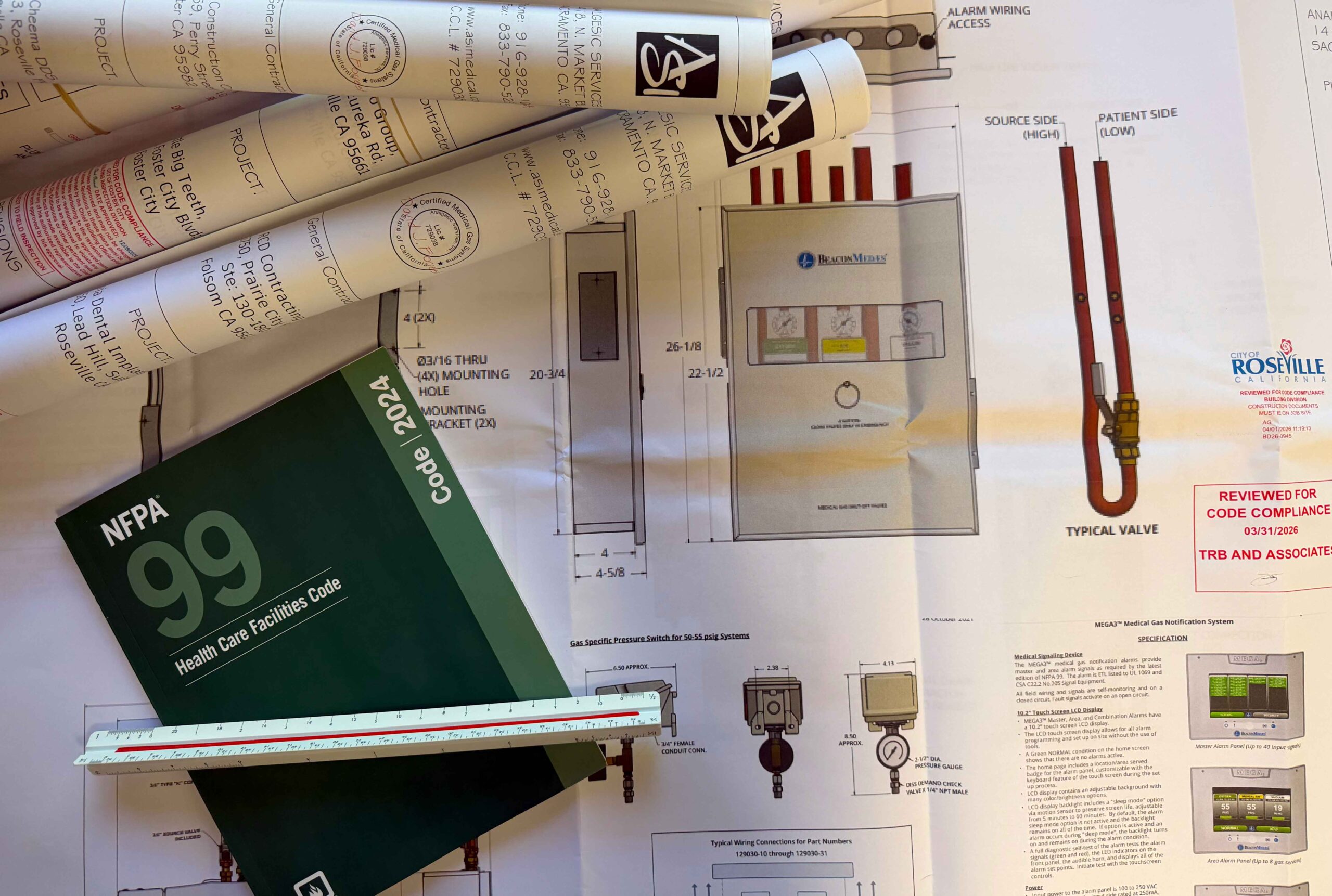






Medical gas compliance is guided by standards such as NFPA, FDA, DOT and local jurisdictional codes, but requirements can vary based on your location, gas volumes, and system setup.
In general, practices are expected to:
Because every office is a little different, we’re happy to help review your setup and walk you through exactly what applies to you.
In many cases, yes. Hazard communication signage helps ensure that staff, visitors, and emergency responders are aware of the gases on site.
Common requirements may include:
Requirements can vary by jurisdiction and volume, so if you’re unsure, we can help determine what’s needed for your location. We can help get you the correct compliant placarding for your office! Call today for help!
Some cities and counties require permits when gas volumes exceed certain thresholds. These thresholds—and the process to obtain permits—vary by municipality.
We regularly work with local authorities and can:
Proper storage is critical for both safety and compliance. Best practices include:
Safe storage protects your team, your patients, and your facility—and it’s something we’re always happy to review with you. Schedule an annual inspection today if you would like our experts to stop by and help you assess what is best for your facility.
Certain gases, like nitrous oxide, may require additional controls depending on state and local regulations. Maintaining a clear chain of custody helps ensure accountability and compliance.
This can include:
If you have questions about your specific requirements and recommendations for best practices, our team can help clarify what applies to your practice.
Nitrous oxide systems require special attention to ensure safety, efficiency, and compliance.
Key considerations include:
We also offer complimentary training with Our Confidence Promise and familiarization to help your team operate with confidence.
Still have questions? We’re here to help.
Every practice is unique, and regulations can vary—but you don’t have to navigate it alone. Whether you need guidance, a quick answer, or a full compliance review, our team is here to support you.
Give us a call- we’re happy to help.